
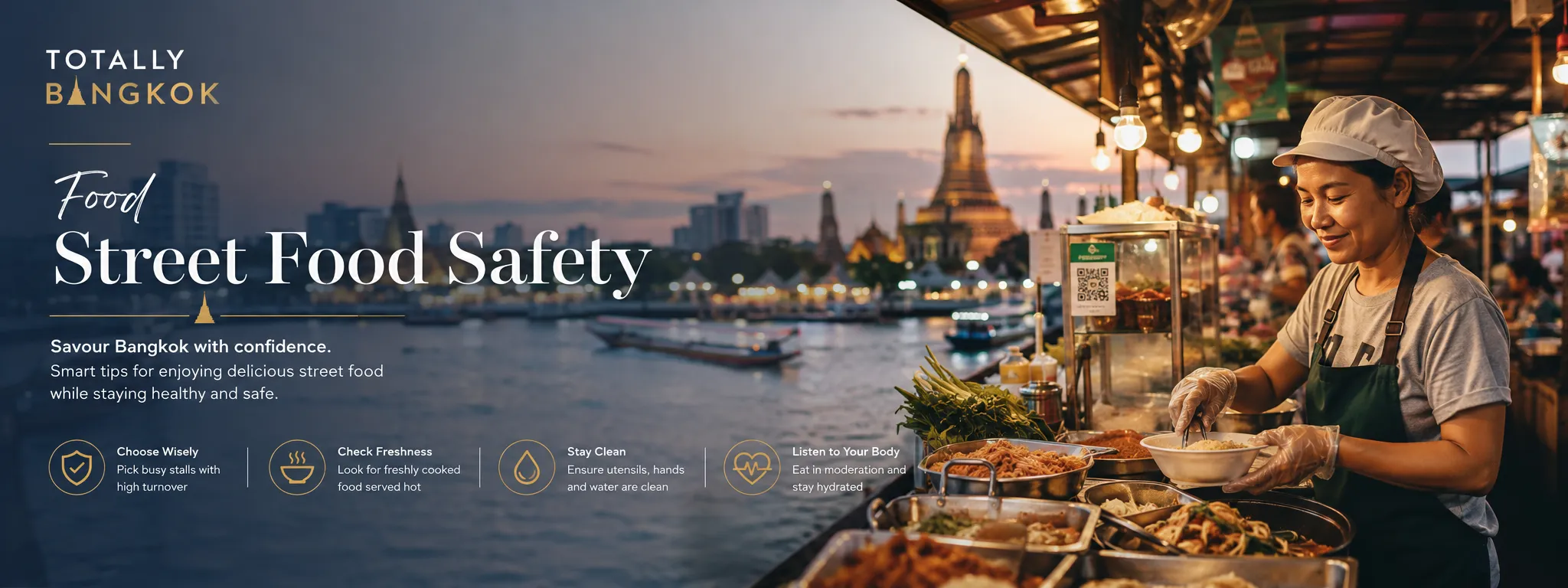
Bangkok street food can be one of the best parts of a trip. The useful question is not “is street food safe?” but how to choose a stall, handle heat and hydration, and recognise the situations where it is smarter to walk away.
A busy stall is usually a better signal than polished décor. Fast turnover means ingredients are being cooked and replaced rather than sitting for long periods. Look for a steady local queue, ingredients stored sensibly, a clean work surface and a vendor who keeps raw and cooked food reasonably separate.
Freshly stir-fried noodles, grilled meat, soup brought back to a proper simmer and eggs cooked to order are easier to judge than trays of lukewarm prepared food. Steam and heat are reassuring only when the food is genuinely hot throughout, not when a tray is merely sitting over a weak warmer.
Prepared curries, rice, seafood and cut fruit deserve more attention if they have been sitting in Bangkok heat for an unknown time. A covered tray with high turnover is different from food that appears to have been exposed for hours. If you cannot tell, choose a made-to-order dish instead.
Raw shellfish, undercooked eggs, rare minced meat and uncooked garnishes carry more uncertainty than food that is thoroughly cooked. Travellers who are pregnant, immunocompromised, elderly or managing a serious medical condition should be more conservative and favour well-cooked dishes from established vendors.
Commercial ice is widely used in Bangkok. The more practical check is whether a drink stall handles ice, cups and money hygienically. Sealed bottled water is easy to buy, and carrying one is useful in the heat. Do not rely on alcohol, soft drink or coffee as your main hydration.
Travellers often blame the last meal when the actual route of infection may have been their own hands after trains, cash, door handles or phones. Wash with soap when possible or use hand sanitiser before eating finger food.
Very spicy food can trigger sweating, reflux, loose stools or stomach discomfort even when the meal is microbiologically fine. If your normal diet is mild, ramp up gradually. Learn “mai phet” for not spicy, while remembering that chilli level is subjective.
Bangkok heat can leave visitors nauseous, headachy, tired and light-headed. Long sightseeing days, alcohol and too little water make this worse. Build drink breaks into market visits, especially in the afternoon, and consider oral rehydration solution if you have significant diarrhoea or vomiting.
Thai cooking commonly uses fish sauce, oyster sauce, shrimp paste, peanuts, egg and shared woks. “Vegetarian-looking” does not guarantee vegetarian or allergen-free. If an allergy could cause a severe reaction, carry translated information, medication and a plan for medical help rather than relying on a casual verbal request.
Neither format is automatically safer. A famous market can contain excellent and poor operators; a tiny neighbourhood stall can have superb turnover and hygiene. Judge the individual vendor, how food is stored and cooked, and whether the stall is busy enough to keep ingredients moving.
If food smells sour, looks spoiled, is unexpectedly cold when it should be hot, or the preparation makes you uncomfortable, leave it. A cheap meal is not worth forcing down. Bangkok has another food option on almost every block.
For mild illness, focus on fluids, rest and simple food as tolerated. Seek medical advice promptly for blood in stool, severe abdominal pain, persistent vomiting, signs of dehydration, high fever, confusion or symptoms that are worsening rather than improving. Children, older travellers and people with underlying conditions can dehydrate faster.
Many short gastrointestinal illnesses do not benefit from antibiotics, and unnecessary use can cause side effects and resistance. A pharmacy can help with basic supplies, but significant illness deserves assessment by a qualified clinician.
Pick a busy cooked-to-order stall, choose one or two familiar dishes, drink bottled water, keep the chilli manageable and stop before you are uncomfortably full. Once you understand portions and spice levels, branch out. You do not need to spend the whole trip eating cautiously to eat sensibly.
Bangkok street food is best approached with normal food-safety judgement rather than fear. High turnover, fresh cooking, clean hands, sensible hydration and a willingness to skip a doubtful stall do far more for you than myths about one particular ingredient or type of ice.